Article · 3 July 2026
From Assay Report to Clinical Action: Rethinking Immunogenicity Workflows with AI and Real-World Evidence
A narrative review published in Bioanalysis Volume 17, No. 24 by Al Meslamani, Jarab, and Mohammed proposes a closed-loop, AI-augmented blueprint for immunogenicity assessment that connects known assay failure points to real-world evidence feedback. The framework addresses the persistent gap between ADA measurement and clinical prediction, drawing on regulatory requirements, validated assay science, and emerging deep learning tools for epitope prediction and pharmacovigilance.
AlpinaBioTech
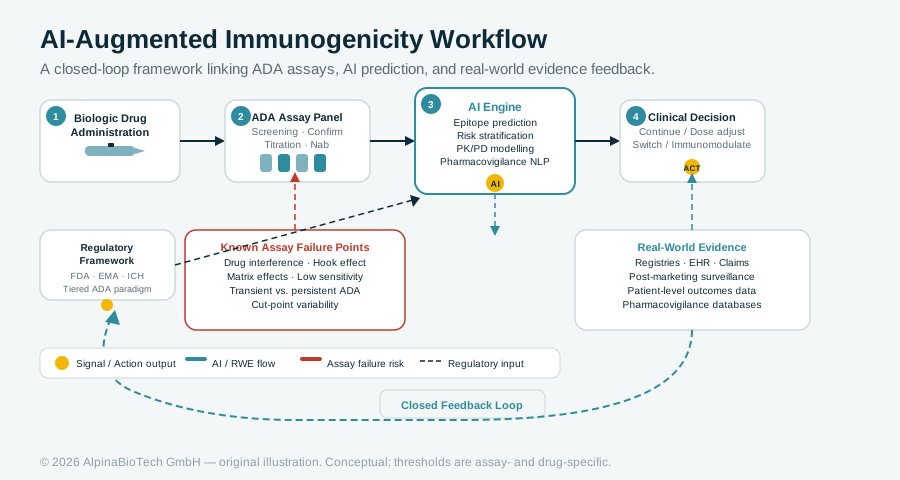
Immunogenicity assessment sits at the center of biologic drug development, yet it carries a persistent and costly blind spot: routine workflows are constrained by drug and target interference in binding assays, matrix and dilution biases in functional assays, fragile cellular readouts, and the stubborn difficulty of translating ADA titers into patient-level risk [1, 2].
These are not new complaints. They appear in every WRIB white paper, every regulatory guidance update, every postmarket safety review. What is new, argued in a paper published in Bioanalysis Volume 17, No. 24 (pages 1797-1812) and epub'd January 13, 2026, by Al Meslamani, Jarab, and Mohammed, is a systematic blueprint for doing something about them: connecting the known failure points of immunogenicity testing to a closed-loop, AI-augmented, real-world-evidence-driven system that keeps learning after the assay report is filed [1, 2].
The paper was highlighted by Bioanalysis Zone on July 1, 2026, and is not a theoretical exercise [3]. The narrative review searched five databases and drew on published original research, regulatory reports, and reviews from 2022 to 2025, making it a timely synthesis of where the field actually stands [2]. For scientists designing or running immunogenicity programs today, the argument it makes is worth understanding in detail.
The Clinical Translation Gap: The Problem That Makes All Others Dangerous
The authors identify several failure points, but the one they rank first is conceptual rather than technical: the gap between measuring an immune response and understanding what it means for the patient in front of you.
The priority is the clinical translation gap, the weak connection between immunogenicity readouts and patient-level consequences. Other failure points, including drug interference, target interference, cut-point instability, matrix effects, and dilution bias, are very important, but they become truly dangerous when they distort clinical interpretation [1, 2].
The brolucizumab case illustrates this concretely. Analysis of the HAWK and HARRIER trial populations found that 86% of patients with at least one retinal vasculitis or retinal vascular occlusion event were neutralizing-antibody-positive, either at baseline (29%) or post-baseline (57%), with investigations suggesting that treatment-emergent anti-drug antibodies may be associated with an increased incidence of these events [9]. In a post hoc review of HAWK and HARRIER data, inflammatory vasculitis occurred in 3.3% of brolucizumab injections [15]. A subsequent systematic review of real-world and clinical trial data confirmed that brolucizumab use has been associated with intraocular inflammation, retinal vasculitis, and vascular occlusion at rates higher than comparator agents [10]. A nationwide population-based cohort study of 60,966 South Korean patients found a cumulative intraocular inflammation incidence of 3.47% in the direct brolucizumab group within 180 days, compared with 0.49% for aflibercept [16].
The ADA signal existed in the trial data; the clinical consequence was not reliably predicted from it. That is the gap the closed-loop blueprint is designed to close.
Anti-erythropoietin antibodies have produced pure red cell aplasia; infliximab and adalimumab continue to lose efficacy in real patients in ways that trial datasets did not fully prepare us for [7]. These are not assay failures exactly. They are failures of the connection between assay output and clinical prediction.
What the Assay Itself Gets Wrong
Before the blueprint, the paper grounds its argument in well-established assay limitations that any immunogenicity scientist will recognize.
Drug interference is the most pervasive. Early studies reporting ADA toward TNF inhibitors mainly used drug-sensitive assays, which retrospectively led to underestimation of the amount of ADA produced. Drug-tolerant ADA assays detect ADA in the presence of drug, which has contributed to currently reported higher ADA incidence [7]. The practical consequence: drug interference complicates accurate quantification of ADA and thereby the assessment of its effect on the pharmacokinetics of the biologic and its clinical relevance, and familiarity with which assay is used and its key characteristics is essential to interpret ADA measurement correctly [7].
Cut-point instability is the companion problem. A cut-point is the threshold signal above which a sample is classified as ADA-positive in a screening assay, typically set at the 95th percentile of the signal distribution from ADA-negative samples [8]. The FDA 2019 guidance on immunogenicity testing recommends a cut-point having a false-positive rate of approximately 5% for the initial screening assay, and provides detailed direction on managing the statistical calculations during method validation, including reporting strategies for pre-existing antibodies [14]. When assay conditions change, reagent lots shift, or the patient population differs from validation subjects, the cut-point derived at validation may no longer perform as intended. Monitoring of the nonspecific signal during sample analyses can help detect problematic assay performance [8].
Target interference adds a third layer of complexity. Soluble or shed dimeric or multimeric drug targets can interfere with the bridging assay format and result in target-mediated false-positive results [5]. Taken together, these failure points explain why ADA and neutralizing antibody signals, even when generated through well-established laboratory workflows, can still be affected by drug or target interference, fragile cut-points, matrix effects, dilution bias, and difficulty translating a titer into patient-level risk [3].
AI Tools: Beyond Proof of Concept
The paper's contribution is to map specific AI capabilities onto each failure point rather than invoking AI as a general remedy [1].
AI now offers practical gains beyond proofs-of-concept: improved T-cell and B-cell epitope prediction, neoantigen and antigen prioritization, antibody humanization and risk scoring, and pharmacovigilance and natural language processing pipelines for narrative case deduplication and normalization [1].
On T-cell epitope prediction specifically, the underlying science has matured rapidly. Wohlwend et al., publishing in Nature Machine Intelligence in January 2025, curated a dataset of 651,237 unique human leukocyte antigen class I ligands and developed MUNIS, a deep learning model that identifies peptides presented by HLA-I alleles, showing improved performance compared with existing models in predicting peptide presentation and CD8+ T cell epitope immunodominance hierarchies [17]. On the B-cell side, a recent systematic review traces prediction methodology from early propensity-scale tools, noting that the first such method for predicting linear B-cell epitopes was introduced by Hopp and Woods, and examines how methodologies have since progressed from traditional machine learning to cutting-edge deep learning models [13].
However, speakers at the 20th Workshop on Recent Issues in Bioanalysis (WRIB), held April 13 to 17, 2026 in Dallas, TX, offered a calibrated note on the state of the field [4]. A Bioanalysis Zone highlights report from that event noted that speakers shared excitement toward breaking away from traditional thinking around immunogenicity testing, while also acknowledging the current limitations of AI-based approaches [4]. Separately, the WRIB highlights record discussion of the three-tier ADA assay paradigm and whether universally applicable guidelines for ADA assays are feasible, with a possible one-tier future strategy outlined [4]. The practical consensus is that AI tools for immunogenicity risk scoring are useful for prioritization and early screening, not for replacing validated wet-lab assays.
On the pharmacovigilance side, NLP pipelines for parsing adverse event narratives from electronic health records and spontaneous reporting systems represent one of the more immediately deployable applications. An integrated workflow connecting immunogenicity risk assessment with in silico analysis can trigger in vitro assays, reduce the number of costly low-throughput in vitro tests, and serve as a screening tool for selecting less immunogenic formats [10]. When combined with real-world safety data, this creates a triage function: identifying which positive ADA signals warrant confirmatory follow-up and which can be managed through protocol adjustment.
Real-World Evidence: The Missing Feedback Loop
The second pillar of the blueprint is the structured use of real-world evidence (RWE) to feed post-market observations back into the immunogenicity assessment workflow.
The FDA uses real-world data and real-world evidence to support regulatory decision-making across the lifecycle of medical products, including pre- and post-market evaluation of effectiveness and safety [11]. Both EMA (in 2017) and FDA (in 2019) issued guidance requiring inclusion of an Integrated Summary of Immunogenicity (ISI) in marketing applications for biological products [10]. Generating the ISI early in development and discussing it at key milestones, such as IND submission and End-of-Phase 2 meetings, offers strategic advantage for aligning with regulators and informing risk management strategies [12].
The Al Meslamani paper argues this regulatory infrastructure exists, but that current practice does not fully use it to close the feedback loop between post-market signals and laboratory practice [1, 2]. The key insight is that immunogenicity assessment should not end when an assay report is generated. It should learn from what happens afterwards: pharmacokinetics, pharmacodynamics, clinical response, adverse events, treatment changes, and post-market safety signals.
The Closed-Loop Blueprint: Seven Steps
The central contribution of the paper is the closed-loop operational blueprint. It starts by defining clinically meaningful immunogenicity phenotypes and the laboratory panels required to confirm them, then standardizes multi-source data, removes duplicate safety reports, trains transparent models, externally validates them, feeds outputs back to the clinic or laboratory, and continuously monitors performance for drift [1, 2].
The practical language for this seven-step cycle is:
- Define laboratory panels and computable phenotypes.
- Map multi-source data (EHR, claims, spontaneous reports) to a common data model.
- Deduplicate and integrate safety reports.
- Train transparent, internally validated risk models.
- Externally validate across distributed networks.
- Route model outputs to clinic or laboratory actions.
- Monitor continuously for drift and maintain an auditable trail.
AI-augmented RWE can replace assay-centric snapshots in immunogenicity assessment with a learning system that focuses on clinically significant ADA and neutralizing antibody effects, targets limited laboratory resources, speeds up signal verification, and enhances post-market vigilance [1].
What This Means for the Bench Scientist
The blueprint's ambition is organizational as much as technical. For the scientist running ADA assays under current validated methods, the near-term takeaways are more focused.
First, cut-point validation documentation should be maintained in a form that allows retrospective comparison when assay conditions change. The FDA's 2019 immunogenicity guidance provides detailed direction on statistical calculation of cut-points during method validation, including how to handle pre-existing antibodies and treatment-boosted ADA, and these documentation requirements form the entry point for any computational monitoring layer [14].
Second, any ADA-positive signal should be read alongside concurrent drug-level measurement. Concurrent drug-level data may provide insight into the extent of underestimation of ADA levels and improves understanding of the clinical consequences of ADA formation; the clinical effects are dependent on the ratio between the amount of drug neutralized by ADA and the amount of unbound drug [7]. That ratio is exactly what a learning system needs to be trained on.
Third, the future of immunogenicity assessment is less about asking whether an antibody signal exists, and more about asking what that signal means for exposure, efficacy, safety, and the next clinical action [1, 2].
That reframe is simple to state and genuinely difficult to execute. The closed-loop blueprint described in Bioanalysis Volume 17, No. 24 is one of the more operationally grounded proposals for how to begin.
All assays and tools referenced in this article are intended for Research Use Only. Not for use in diagnostic procedures.
Sources
- [1] tandfonline.com
- [2] pubmed.ncbi.nlm.nih.gov
- [3] bioanalysis-zone.com
- [4] bioanalysis-zone.com
- [5] ncbi.nlm.nih.gov
- [6] tandfonline.com
- [7] tandfonline.com
- [8] europe.ophthalmologytimes.com
- [9] pmc.ncbi.nlm.nih.gov
- [10] pmc.ncbi.nlm.nih.gov
- [11] fda.gov
- [12] pmc.ncbi.nlm.nih.gov
- [13] pmc.ncbi.nlm.nih.gov
- [14] fda.gov
- [15] sciencedirect.com
- [16] nature.com
- [17] nature.com
More articles
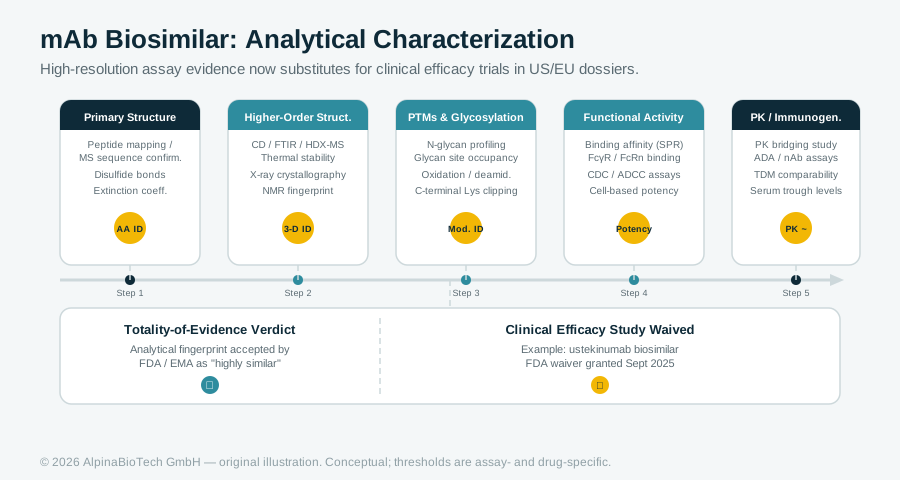
What "Highly Similar" Actually Requires: Analytical Methods for mAb Biosimilar Characterization
Regulatory approval of mAb biosimilars now depends less on replicating clinical trial results and more on high-resolution analytical characterization. A 2026 BioDrugs review of successful US and EU dossiers maps the assay strategies that matter, while the FDA's September 2025 waiver of a clinical efficacy study for a ustekinumab biosimilar makes the principle concrete for immunoassay and TDM scientists.
Read more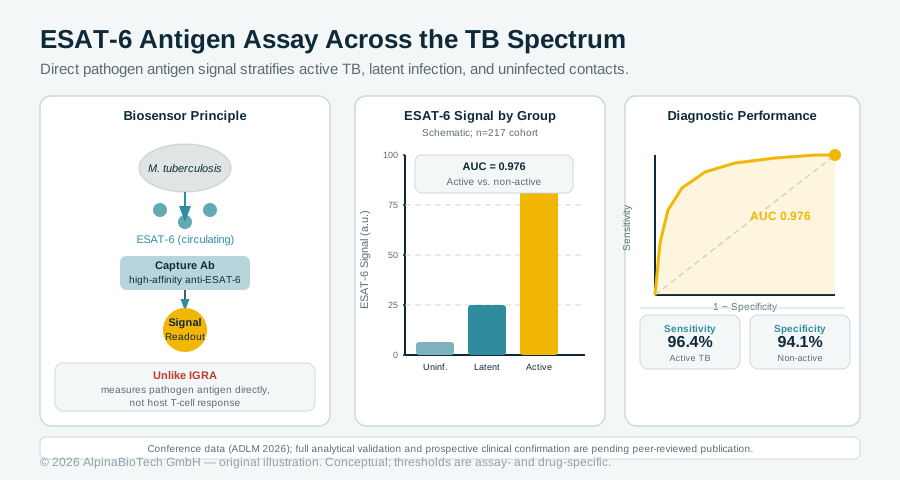
Measuring the Pathogen, Not the Host: A High-Sensitivity ESAT-6 Blood Assay Distinguishes Active TB Across the Infection Spectrum
A high-sensitivity biosensor for circulating ESAT-6 protein, a direct secretory product of Mycobacterium tuberculosis, produced a stepwise quantitative signal across the full TB infection spectrum in a 217-patient cohort presented at ADLM 2026. Unlike IGRAs, which measure host immune response, this antigen-direct approach distinguished active disease from latent infection and uninfected contacts with an AUC of 0.976, as reported in conference coverage pending peer-reviewed publication. Full analytical validation and prospective clinical data remain outstanding.
Read more