Articles
Notes on immunoassays and drug monitoring
Background on ELISA methods, therapeutic drug monitoring, anti-drug antibodies, biosimilars, and assay validation.
15 articles
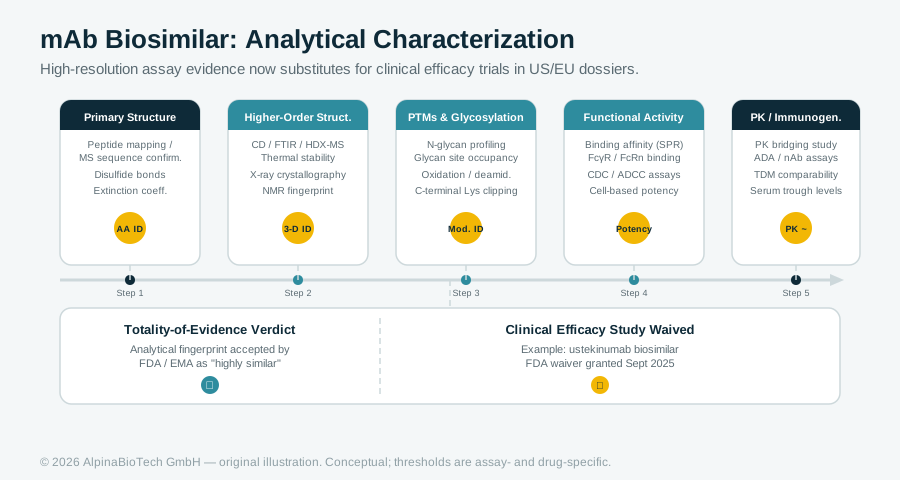
What "Highly Similar" Actually Requires: Analytical Methods for mAb Biosimilar Characterization
Regulatory approval of mAb biosimilars now depends less on replicating clinical trial results and more on high-resolution analytical characterization. A 2026 BioDrugs review of successful US and EU dossiers maps the assay strategies that matter, while the FDA's September 2025 waiver of a clinical efficacy study for a ustekinumab biosimilar makes the principle concrete for immunoassay and TDM scientists.
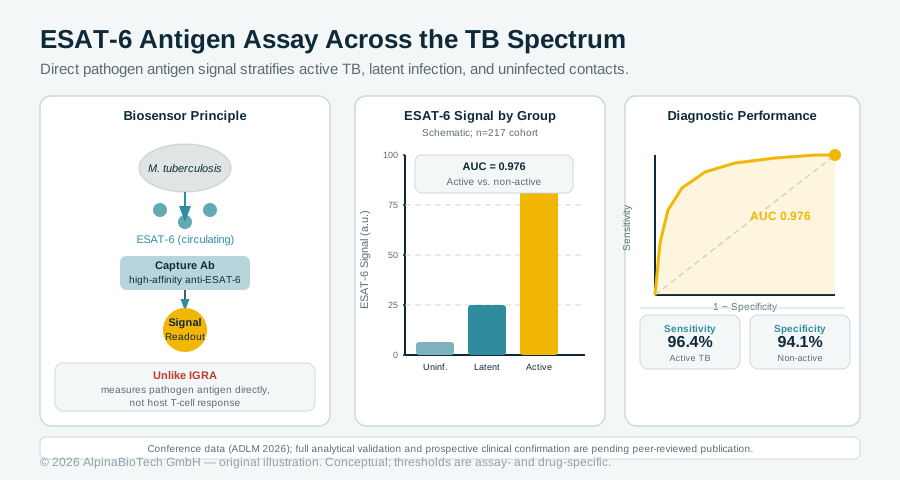
Measuring the Pathogen, Not the Host: A High-Sensitivity ESAT-6 Blood Assay Distinguishes Active TB Across the Infection Spectrum
A high-sensitivity biosensor for circulating ESAT-6 protein, a direct secretory product of Mycobacterium tuberculosis, produced a stepwise quantitative signal across the full TB infection spectrum in a 217-patient cohort presented at ADLM 2026. Unlike IGRAs, which measure host immune response, this antigen-direct approach distinguished active disease from latent infection and uninfected contacts with an AUC of 0.976, as reported in conference coverage pending peer-reviewed publication. Full analytical validation and prospective clinical data remain outstanding.
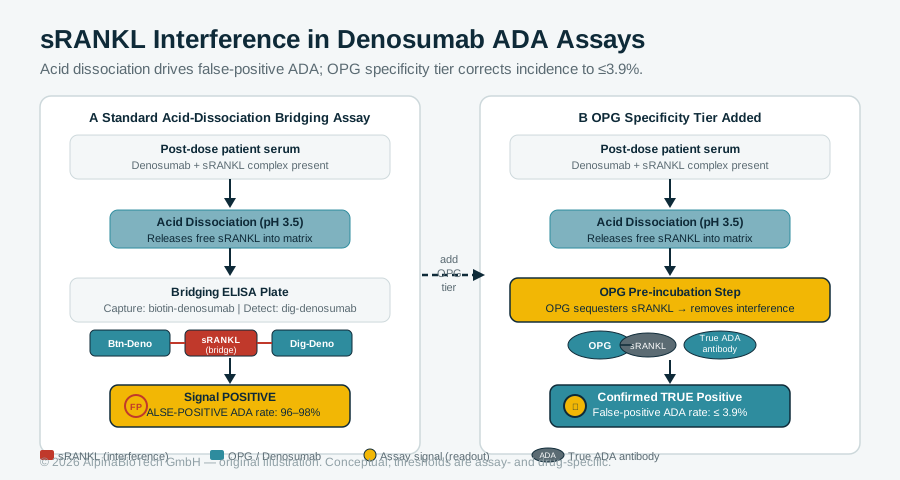
ADA Assay Design for Denosumab Biosimilars: The sRANKL Interference Problem and How to Solve It
Standard acid dissociation pretreatment in denosumab anti-drug antibody bridging assays can generate false-positive ADA rates approaching 96 to 98%, driven by soluble RANKL accumulation after dosing. Adding osteoprotegerin as a specificity tier corrects observed false-positive incidence to 3.9% or below. This article reviews the assay mitigation strategy alongside the clinical immunogenicity evidence from ten FDA-approved denosumab biosimilar programs.
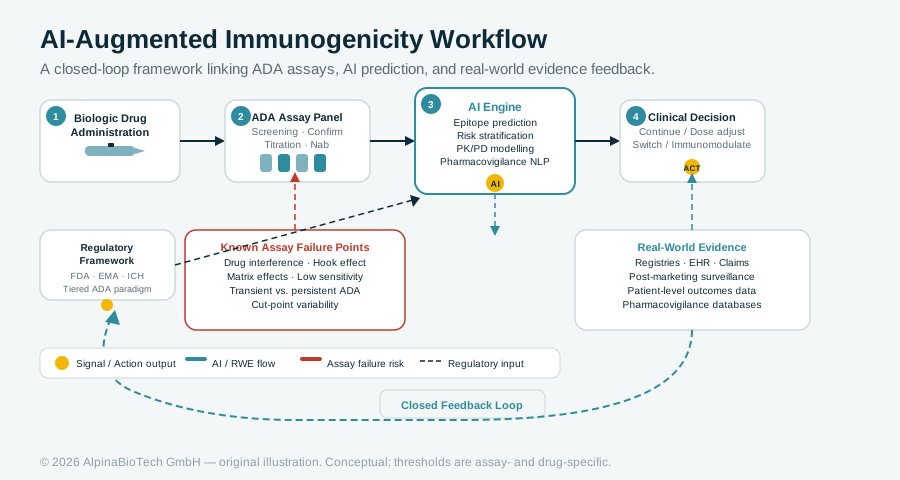
From Assay Report to Clinical Action: Rethinking Immunogenicity Workflows with AI and Real-World Evidence
A narrative review published in Bioanalysis Volume 17, No. 24 by Al Meslamani, Jarab, and Mohammed proposes a closed-loop, AI-augmented blueprint for immunogenicity assessment that connects known assay failure points to real-world evidence feedback. The framework addresses the persistent gap between ADA measurement and clinical prediction, drawing on regulatory requirements, validated assay science, and emerging deep learning tools for epitope prediction and pharmacovigilance.